II-Congreso-Mundial-de-Personalismo
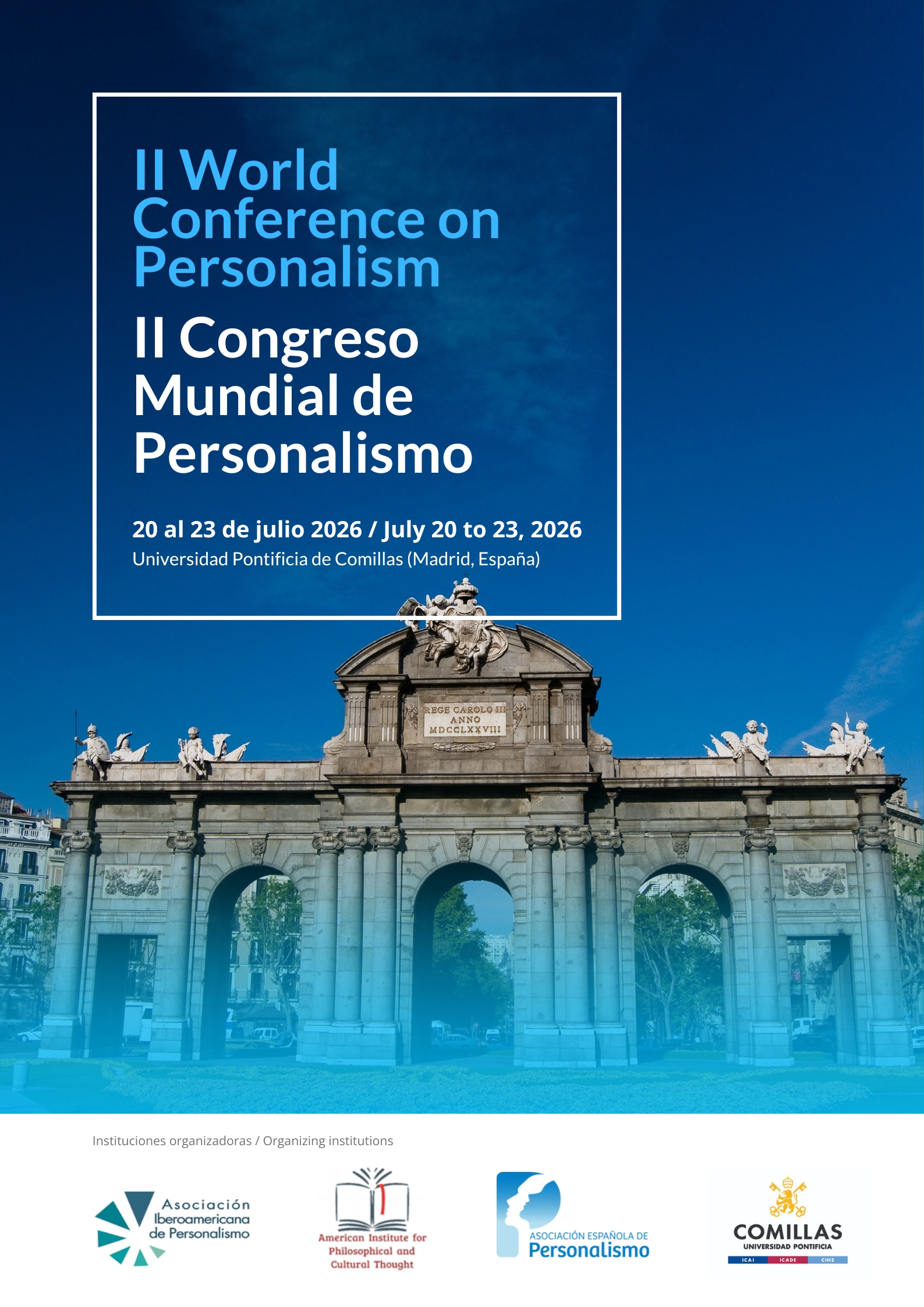
I will be a speaker on the World Conference on Personalism, taking place in Madrid (July 20th-23rd).
Following the recent publication of my book on Luigi Pareyson, I chose to talk about the relevance of the „existenctialist turn“ that followed from the decomposition of Hegel´s philosophy of system. I will address Pareyson´s readings of Kierkegaard and others, and clarify some key terms of Pareyson´s „Ontology of Freedom“. Here is the abstract:
Pedro Sargento
Living hermeneutics in Luigi Pareyson´s Ontology of Freedom
The final phase of Luigi Pareyson’s thought, which he himself termed the Ontology of Freedom, describes reality as an event resulting from an originary freedom of a decidedly metaphysical and theological character. One of the most distinctive features of his reflection on the concept of freedom lies in the fact that it emerges from the acknowledgement of the pervasive presence of evil in the world. This renders his ontology a lived ontology – that is, an ontology not motivated by the search for a justification of theism, but rather grounded in the direct confrontation with evil and suffering in an attempt to understand and situate them philosophically.
Through the expression “evil in God”, Pareyson situates the origin of evil within divinity itself, thereby suggesting that the concrete presence of evil among human beings and throughout history points toward an inextricable relation between the person and transcendence. This paper aims to demonstrate how the Ontology of Freedom provides a more robust theoretical foundation for the Pareysonian personalism already outlined by the philosopher during the 1950s. Accordingly, we shall elucidate the ways in which the Ontology of Freedom radicalizes ontological personalism through a living hermeneutics of the human condition within history and within the ambiguity of a freedom that traverses reality itself – cosmotheandric freedom.